


Feel the power. Up to
250 kW1,2
Electric power output
Instant acceleration. Lasting enjoyment
5.4 s2
Maximum acceleration (0–100 km/h)
Road trip, fully charged. Up to
530 km (WLTP) (provisional)3
Electric range
Fascinating facts.
What makes the Audi Q4 Sportback e-tron4 so convincing.

Your digital stage.
The curved panoramic display is angled towards you. It can be complemented by an MMI front passenger display5,7,8

Clever co-pilots.
Intelligent assist systems9 make your task easier in traffic and help you with both driving and parking.

Double the power.
With the new centre console you can now charge two smartphones10 simultaneously: conveniently, wirelessly and within easy reach.

There can never be enough sockets.
New in the Q4 Sportback e-tron1: A 230-volt socket5 in the luggage compartment – ideal for charging devices when out and about. Even without the ignition switched on.11

Information at a glance.
The augmented reality head-up display5,12 integrates information as a graphic on the windscreen in your field of vision.

Clarity and quality define the interior. Take a seat in the front sport seats and experience a dynamic driving sensation, enhanced by the sport leather steering wheel5 flattened at the top and bottom.

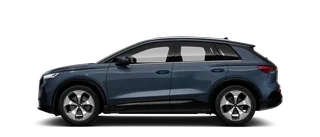
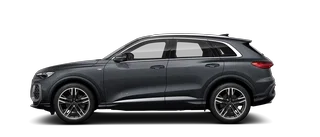
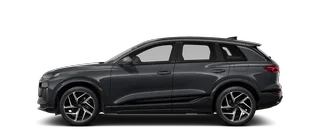
The gently sloping rear end gives the Audi Q4 Sportback e-tron4 its visual dynamism, while the seemingly floating roof line conveys lightness and elegance. The unit of bumper and raised diffuser forms a powerful conclusion.

At HPC stations, a fast-charging capacity of up to 185 kW (DC)12 can be reached, which means that an energy content can be topped up that increases the range by up to 185 km (WLTP)3 in 10 minutes12. The charging break is therefore just about long enough for a coffee.
1 Audi Q4 Sportback e-tron: Power consumption (combined): 18.6–14.8 kWh/100 km (provisional); CO₂ emissions (combined): 0 g/km; CO₂ emission class: A. Based on global data. Local values TBC.
2 The power output available in individual driving situations depends on variable factors such as ambient temperature, charging/temperature/conditioning status or physical ageing of the high-voltage battery. Any deviations from the parameters specified above in particular can lead to reduced power output. The power output currently available is displayed on the vehicle’s power
3 The figures specified apply exclusively for the Audi Q4 Sportback e-tron quattro performance: Power consumption (combined): 18.5–15.8 kWh/100 km (provisional); CO₂ emissions (combined): 0 g/km; CO₂ emission class: A. Based on global data. Local values TBC.
4 The figures specified apply exclusively for the Audi Q4 Sportback e-tron performance: Power consumption (combined): 17.7–15.2 kWh/100 km (provisional); CO₂ emissions (combined): 0 g/km; CO₂ emission class: A. Based on global data. Local figures TBC.
5 The equipment mentioned is an option available for an extra charge.
6 The charging time of the battery and the maximum DC charging capacity at High Power Charging (HPC) charging stations were calculated according to DIN 70080 and can vary depending on a number of different factors including ambient and battery temperature, the use of other country-specific connectors, the use of the interior air conditioning (e.g. remote-controlled air conditioning of the vehicle), the preconditioning function to adjust the drive battery to a suitable temperature for charging/driving, the capacity available at the charging station, state of charge and battery ageing. Charging capacity is reduced as the state of charge increases. Charging losses are considered. Charging capacity depends on the type of mains connector used, the country’s voltage and the number of available phases of the power network as well as the customer’s own domestic installation. It may therefore be lower in some cases. The mains connecting cable with industrial connector and the operating unit of the charging system are matched to each other and enable a certain charging capacity. Although it is technically feasible to switch the mains connecting cable to a different industrial connector later on, this could result in a lower charging capacity.
7 Only in conjunction with Tech plus or Tech pro.
8 Visibility of the content shown on the MMI front passenger display is restricted to the front passenger
9 Please note: The systems work only within system limits and assist with driving. However, the driver remains responsible for driving the vehicle and is required to be attentive at all times.
10 Please contact your Audi Partner or visit www.audi.com/bluetooth for information on compatible mobile phones
11 To use vehicle-to-load, the state of charge of the high-voltage battery must be at least 20%.
12 Polarising sunglasses will restrict the use of the head-up display.